Shedding, dry skin and itching: what to do

Shedding, dry skin and itching: what to do

Sort out the cause first
- Seasonal shedding is normal — more hair comes out for a while, but the skin underneath stays normal: no redness, no flakes, no scratching.
- External parasites such as fleas or mites are a leading cause of itching, and the answer is parasite control, not a food change.
- The environment matters too — dry air, a shampoo that is too harsh, or bathing too often will dry the skin out.
- Food allergy is real but not the first suspect, and testing for it needs a vet's plan.
- Skin disease and systemic conditions — fungal or bacterial infection, hormonal problems — need a diagnosis.
Where does diet actually help?
Skin and coat consume a disproportionate share of a pet's protein and fat, so good protein and the right fatty acids are the foundation of coat care.
Omega-3 from fish oil is widely used for skin and coat. The catch is that oil separates in a water-based digestive tract, so the body cannot reach all of it. GLYCO-SOS™ addresses exactly that, breaking the oil into nano-scale droplets and encapsulating them so they disperse through water instead of separating.
Zinc, biotin and antioxidants also play a part in skin and coat health.
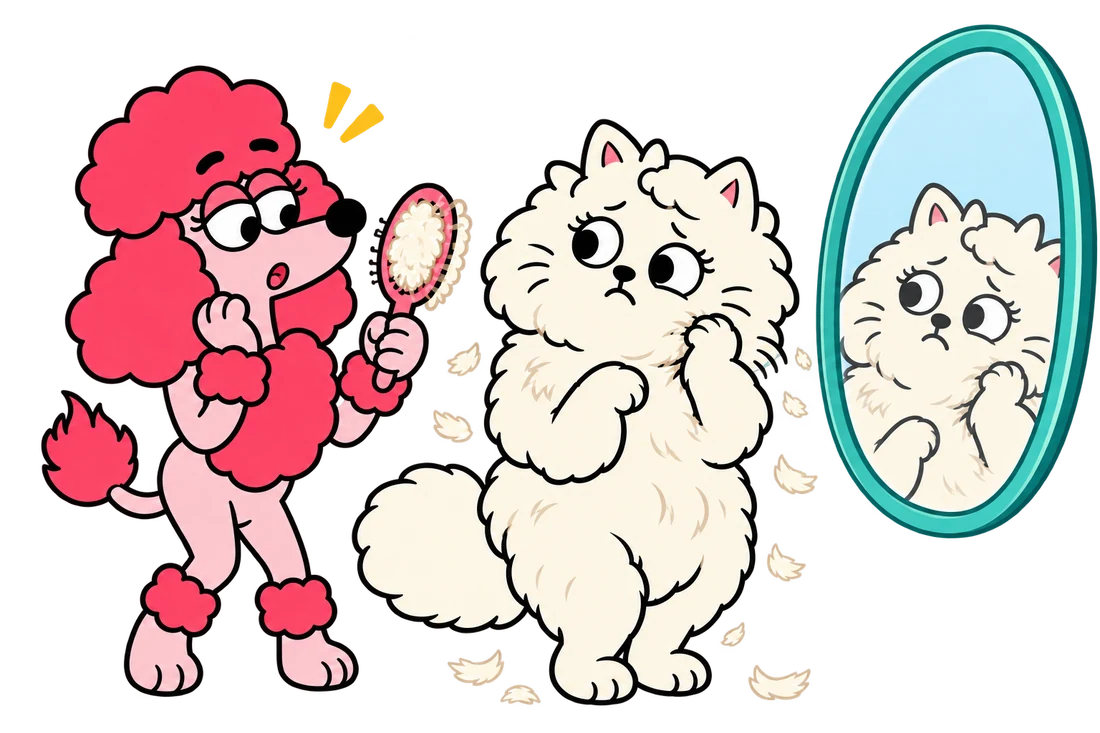
What you can do at home
- Brush regularly — it removes loose hair before it reaches the furniture and spreads the skin's natural oils.
- Do not bathe more often than necessary, and use a shampoo made for pets — never a human one.
- Keep fresh water available at all times.
- Give any diet change six to eight weeks before judging it — the hair growth cycle takes that long.
When should you see a vet?
- Bald patches down to the skin
- redness, swelling, pustules or odor
- scratching that breaks the skin
- hair loss alongside weight change or lethargy
- no improvement after parasite treatment.
FAQs
Does heavy shedding mean the food is wrong?
Not necessarily. Seasonal and breed-related shedding is normal. Look at the skin underneath — if it is normal and there is no scratching, food is usually not the issue.
Can I add fish oil myself?
Ask a vet first. Added fat changes the total daily energy your pet receives, and it may be unnecessary if the current recipe already provides it.
How often should I bathe my pet?
There is no single number. It depends on breed, coat and daily activity. Bathe when the coat is dirty or smells, not on a fixed calendar, and use a shampoo made for pets. If a vet has prescribed a medicated shampoo, follow the schedule they set.