How often should you feed dogs and cats, and how much?
How often should you feed dogs and cats, and how much?
Why is there no single correct amount?
The right amount of food depends on several factors, including body weight, age, breed, activity level and current body condition. Two pets of the same weight may need different amounts of food if one is much more active than the other.
Start with the feeding guide on the pack
Pet food packaging usually includes a feeding guide based on the pet's weight and the energy content of that particular formula. Use this as a starting point rather than a fixed rule. From there, monitor your pet's weight and body condition and adjust the amount gradually if necessary.
How many meals should pets eat each day?
- For puppies and kittens under six months, around three to four meals a day, because they have smaller stomachs and relatively high energy needs.
- For adult pets, around two meals a day is commonly used.
- For senior pets, two to three smaller meals may be appropriate depending on their individual needs.
How can you tell whether you are feeding the right amount?
Do not rely only on the number printed on the packaging. Check your pet's body condition as well.
- At an ideal body condition, you should be able to feel the ribs easily without them being overly visible, and there should be a visible waist when viewed from above.
- If the ribs, spine or hip bones are clearly visible, the pet may be too thin.
- If the ribs are difficult to feel and there is little or no visible waist, the pet may be carrying excess weight.
Common feeding mistakes
- Treats are easy to forget when calculating daily food intake. Keep treats to no more than around 10% of total daily energy intake.
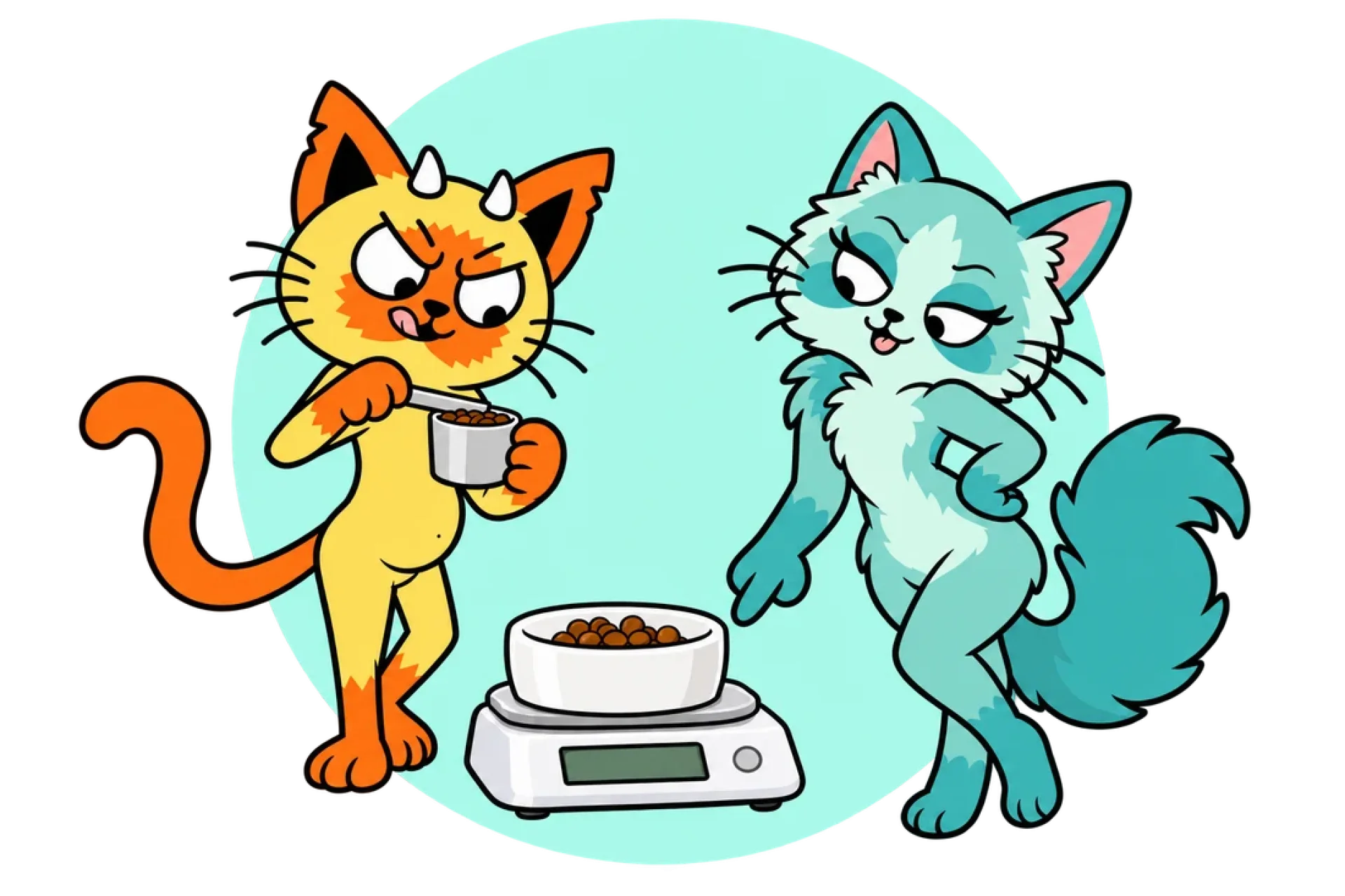
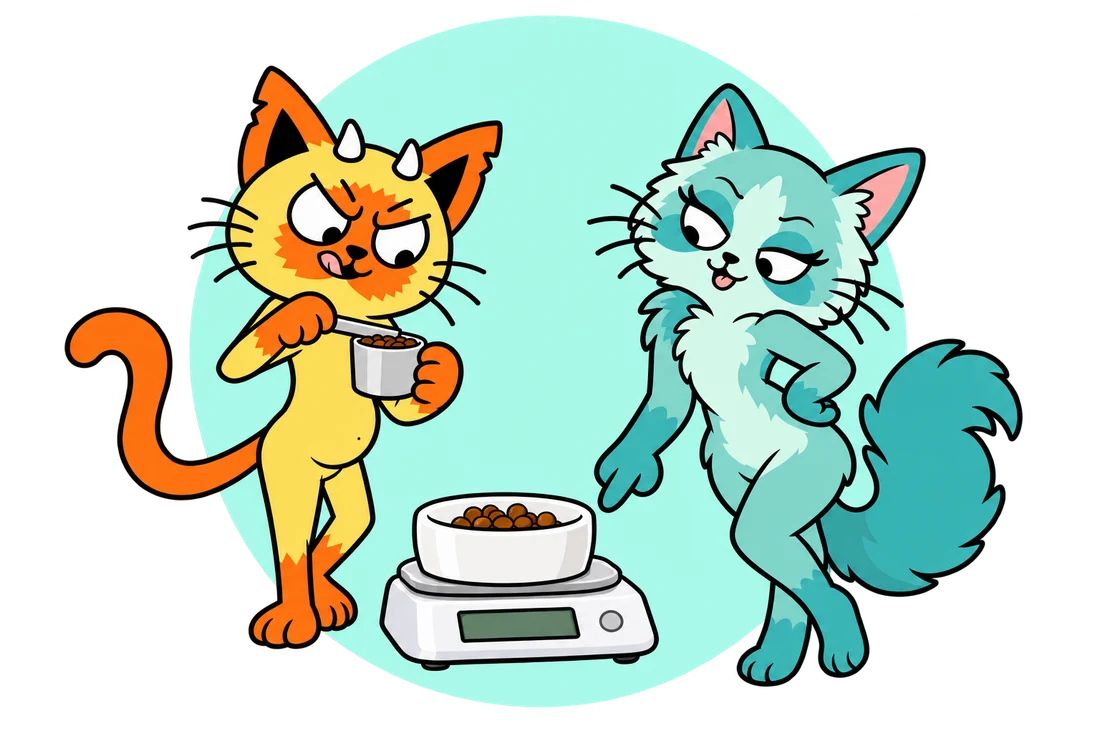
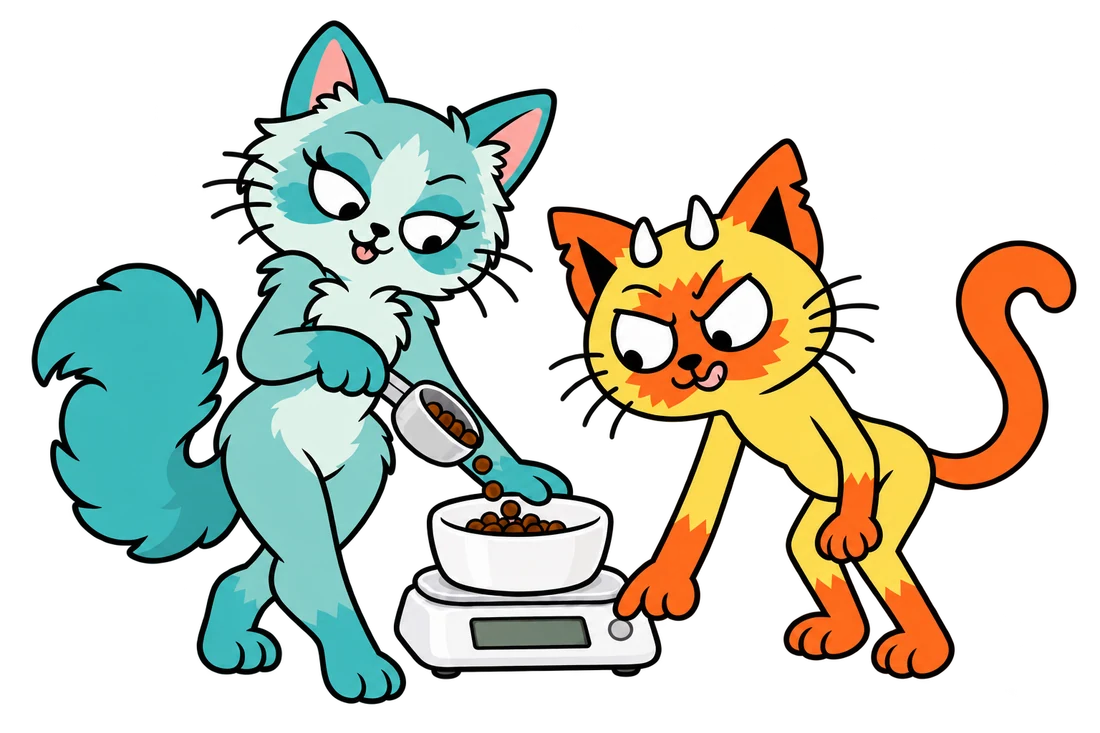
- Estimating portions by eye can also be inaccurate. A kitchen scale or a clearly marked measuring cup can help provide more consistent portions.
- Leaving unlimited food available throughout the day can make weight management more difficult, particularly for less active indoor pets.
FAQs
Can I reduce my pet's food if they are gaining weight?
Small adjustments can be made gradually — reduce the amount by around 10% and monitor for two weeks. If your pet is significantly overweight or you are unsure what to do, speak to a vet.
What if I feed both dry and wet food?
You need to consider the total energy provided by both foods. If you add wet food, the amount of dry food may need to be reduced accordingly.
Why does my pet keep asking for food even after eating?
Food-seeking behaviour does not always mean genuine hunger. Some pets learn that asking results in food. Body weight and body condition are better indicators than begging behaviour alone.